
We help overloaded learning teams in mid‑sized companies keep up.
Demand is growing fast. Can you keep up?
We help you find the capacity to make it happen.
How to recognize the work
You may already know an organization that sounds like this.
These are the sentences we hear in a first conversation. If two or three sound familiar, there is work worth doing.
- “Demand keeps growing, but headcount doesn't. We're expected to keep doing more with the same people.”
- “A handful of experts are the bottleneck for every project. One day of work turns into a three-day turnaround.”
- “Urgent work always wins. The projects that would actually make us better keep getting pushed back.”
- “We have AI and other tools that could probably help us, but nobody has time to figure out how to use them properly.”
- “Our systems don't work well together, so people spend hours moving information from one place to another.”
- “Too much knowledge lives in people's heads, so when someone leaves, the process breaks down.”
Does this describe a team you know?
Introduce us!With the right diagnosis —
Your go-to people stop being the bottleneck. Knowledge stops leaving when people do. The tools you already pay for start earning their place.
We help overloaded learning teams achieve more without hiring more people. Want to find out how to have more capacity, better focus, effective modernization, and superior execution?
What changes for you
With HSConsulting, four things start working differently.
Bottlenecks turn into capacity
We help you find hidden capacity. Your go-to people and resources stop being the only route to getting it done.
Knowledge outlives the people
Your team’s knowledge stops walking out with whoever happens to leave the team.
Technology earns its place
The platform or AI tool you pay for generates the desired impact. More room is made for new and impactful technology.
Modernization gets a number
You can put a figure on what the current way of working costs — so the next investment argues for itself.
Why HS Consulting?
Many modernization initiatives focus on solving isolating problems through technology. (And nowadays, technology expires fast).
HS Consulting is different.
We look at the system, not just the tool.
We identify what is actually limiting your team before recommending what to change.
We understand Learning Operations end to end.
From knowledge flow and learning delivery to governance, processes, and technology.
We connect strategy to implementation.
We don’t stop at recommendations. We help turn the right opportunities into working solutions.
We build for change.
Technology will evolve. We design modernization so your organization can evolve with it, not start over every time it does.
Capability Design
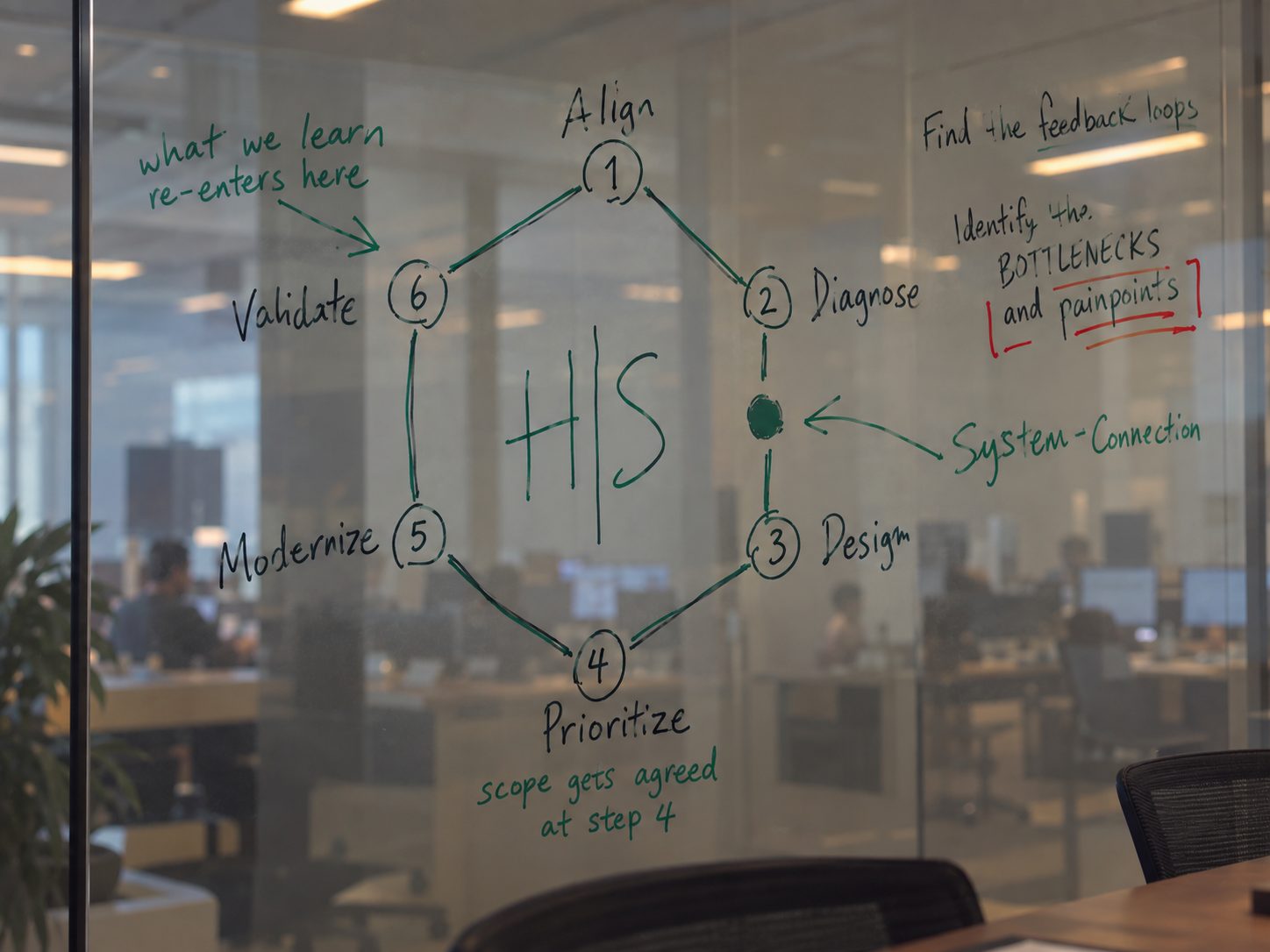
Six steps.
Every engagement runs the same sequence. What changes is the scope — and you set it with us at step four, before anyone commits to building anything.
Align
What is your organization trying to become, and which part of it are we working on?
Diagnose
We read the system through a fixed set of lenses — to understand it, not to pitch you something.
Design
What would the system have to look like to give you the outcome you named in step one?
Prioritize
Together we pick the moves that return the most for the effort. Scope is set here.
Modernize
We build it — automation, agentic AI, knowledge architecture, learning operations.
Validate
We measure against what we agreed at step four. If it didn't move, you hear it from us first.
Engagements
Four ways in, in the order most people use them.
Each stands on its own. None of them obliges you to buy the next.
Diagnostic
“Help us understand what's holding us back.”
Roadmap
“Tell us what to modernize, and in what order.”
Implementation
“Help us build it.”
Partnership
“Help us stay modern as things keep moving.”
Who you would be working with
A small practice, on purpose.
You talk to the people who do the work. There is no delivery team behind the curtain.
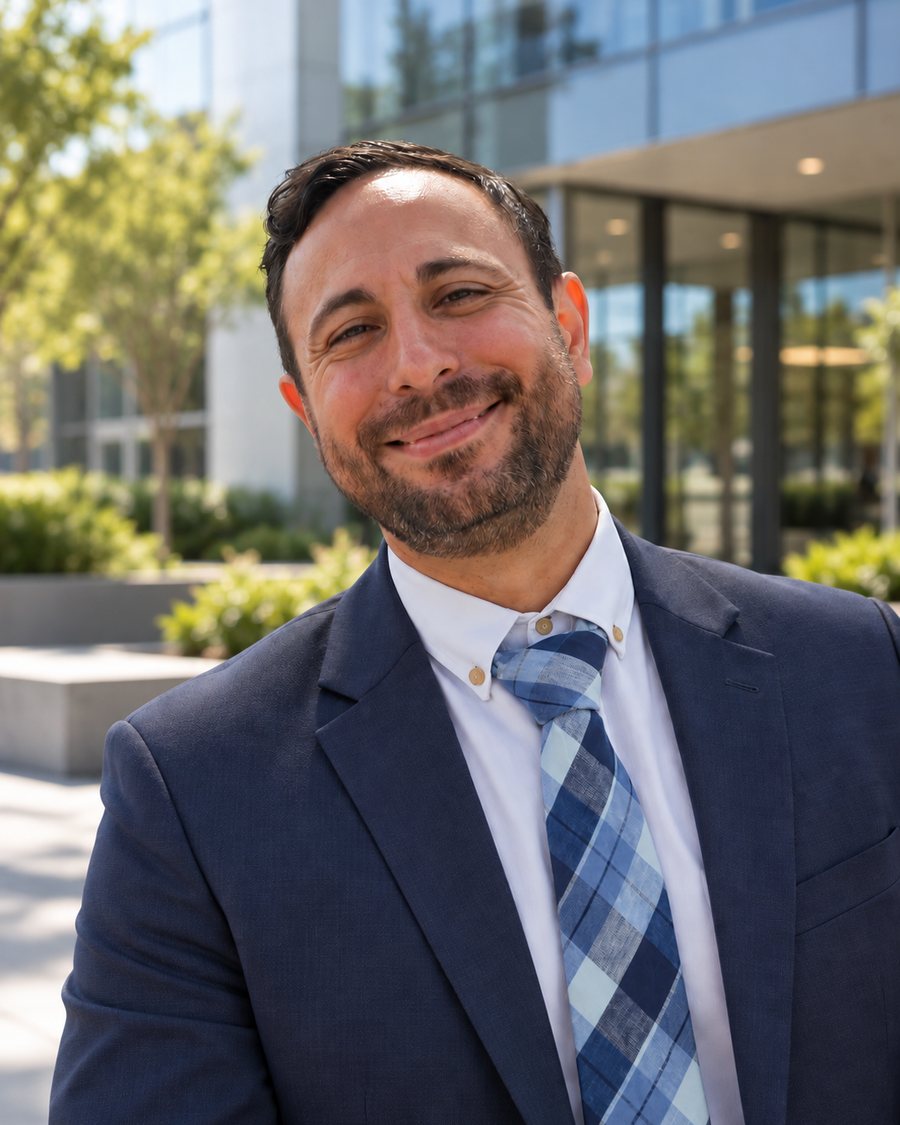
I've spent more than a decade inside the systems organizations use to learn, share what they know, and get work done — in startups and in global enterprises. After enough years you stop seeing departments and start seeing one system with constraints in it.
How I work is simple to describe: warmth first, then candour. I want you to trust me enough that I can tell you what I actually found.
The technical side runs on the Microsoft 365 environment: automation, agentic AI, SharePoint architecture, and tooling built for your case rather than bought off a shelf.

[Placeholder — replace with Jay's real bio. Two or three sentences: what he did before, what he does here, and why a prospect would want him to be the one who answers first.]
[Optional second paragraph — how he works, or what he cares about.]
Start with a conversation, not a proposal.
Thirty minutes. You describe where the friction is; I tell you honestly whether it's the kind of problem I'm built for. If it isn't, I'll say so and point you somewhere that better matches your needs.